Ottawa (Canada), 1999: Ceremonial Performance, State Power, and Public Space
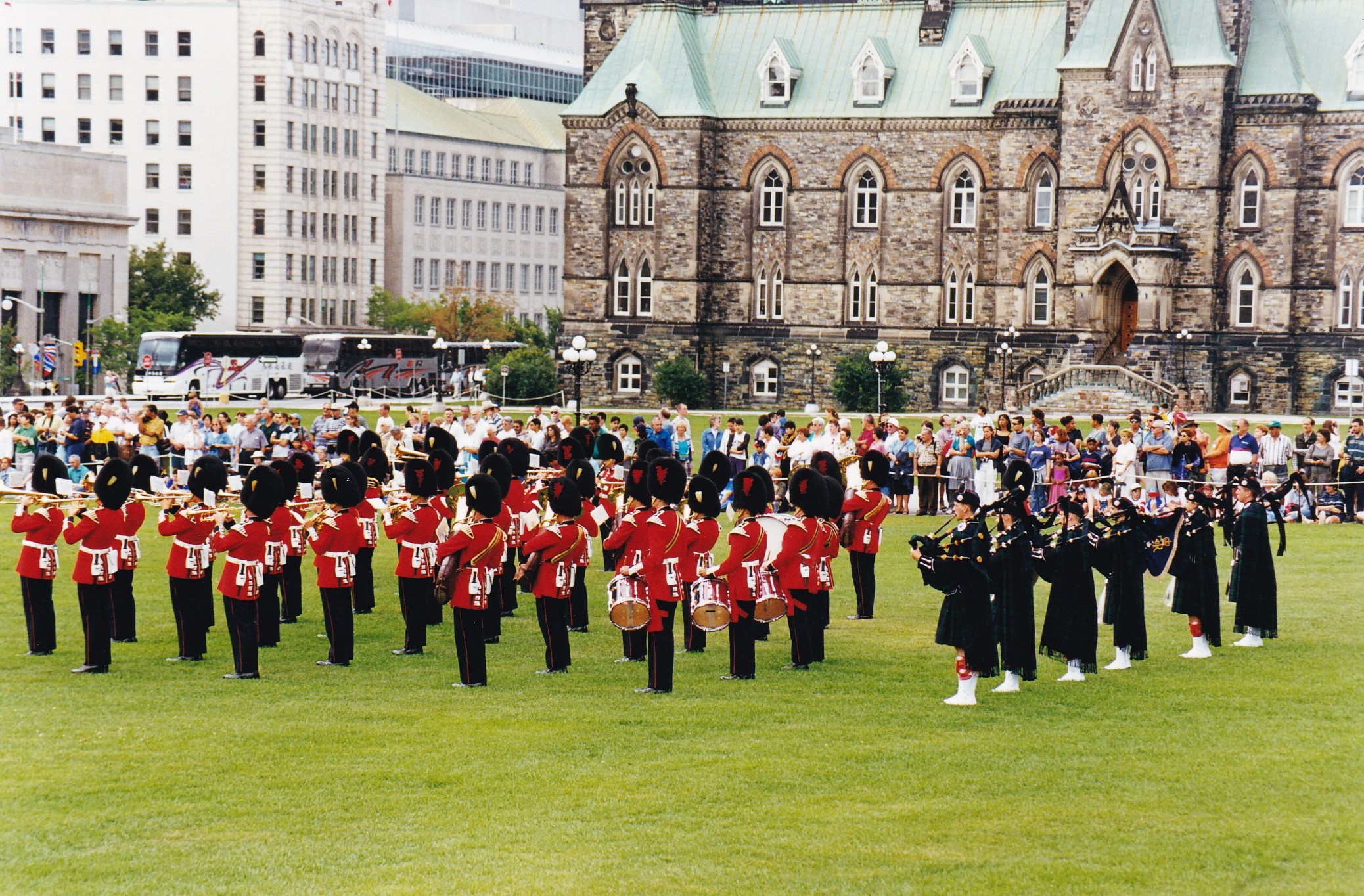
This photograph, taken in Ottawa in 1999, captures a formal ceremonial performance in a public institutional space, where military bands and uniformed performers occupy the center of a large open lawn, surrounded by an audience of spectators. The image offers a clear visual representation of how state power is enacted, staged, and made visible through ritual practices.
At the core of the composition, a military band in red ceremonial uniforms stands in a precise formation, accompanied by bagpipers dressed in traditional attire. The disciplined spatial arrangement of the performers reflects hierarchy, coordination, and control, transforming the open space into a structured environment shaped by institutional authority.
The presence of the audience in the background introduces a crucial dimension: the relationship between power and spectatorship. Citizens observe the performance from a defined boundary, reinforcing the distinction between those who enact the ritual and those who witness it. This separation highlights how public ceremonies function not only as displays of authority but also as moments of collective participation and identity-building.
From a visual perspective, the contrast between the vivid red uniforms and the green lawn enhances the symbolic visibility of the performers, while the architectural backdrop—representative of Ottawa’s governmental and institutional landscape—anchors the scene within a space of political significance.
Historically and culturally, the image reflects the role of ceremonial practices in consolidating national identity. Through repetition, discipline, and visual coherence, these performances transform abstract concepts such as the state and the nation into tangible, observable realities.
Within the framework of visual history, this photograph illustrates how power operates through space, ritual, and representation. Public ceremonies like this one do not merely commemorate—they actively construct and reinforce political meaning, embedding authority within everyday urban environments.
Ultimately, this image of Ottawa (Canada, 1999) reveals how state power is performed and legitimized in public space, where memory, identity, and authority converge through carefully orchestrated visual practices.


Commenti recenti