Two Cities in One: Culture, Consumption, and Urban Inequality (Paris, France, September 2026)
Paris occupies a distinctive position in the global geography of culture and consumption. Its museums, monuments, streets, and public spaces constitute an extraordinary concentration of historical heritage, attracting visitors from across the world. The city’s international prestige rests on a long process through which artistic production, political power, urban transformations, and commercial activities have shaped its image as a cultural capital. Yet this accumulation of symbolic and economic resources coexists with profound inequalities in the conditions under which people inhabit and experience the city.
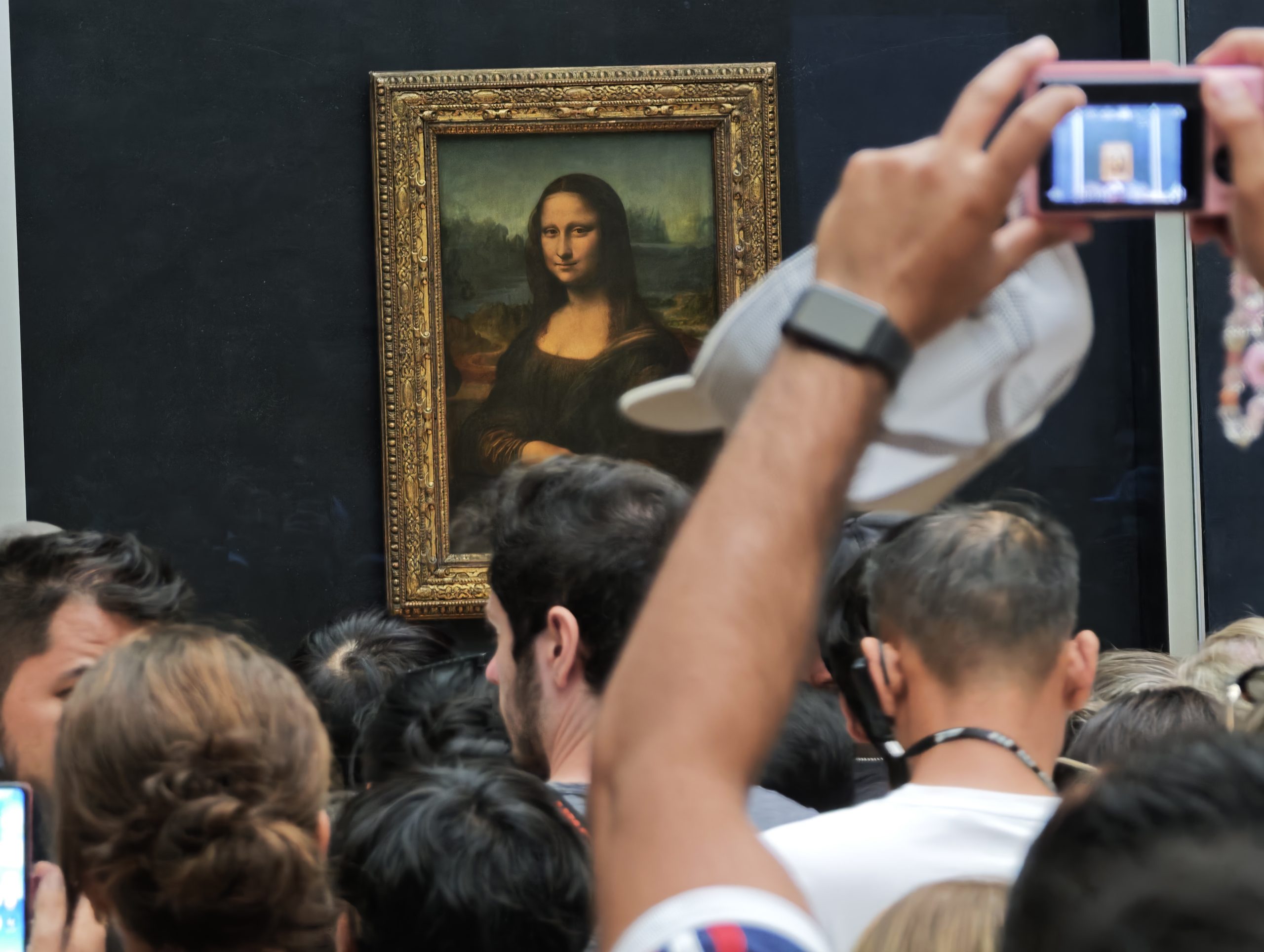
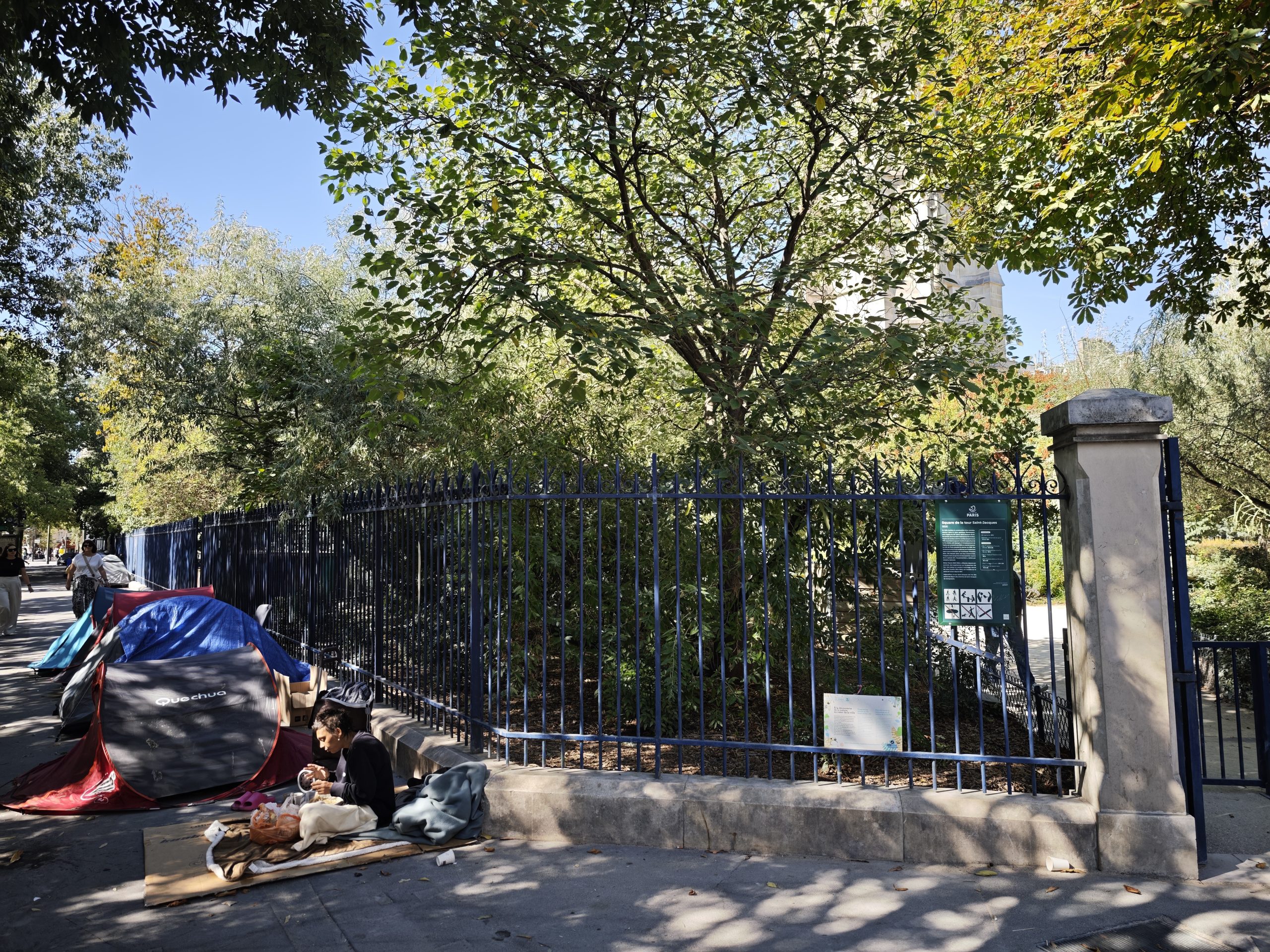
Two photographs taken on 12 September 2026, within a relatively small area of central Paris, reveal different dimensions of this contradiction.
The first photograph captures a familiar scene inside the Louvre. Leonardo da Vinci’s Mona Lisa, one of the most recognizable artworks in the world, hangs behind a dense crowd of visitors. A raised smartphone reproduces the painting on its screen, while the people gathered in front of it compete for a position from which to observe or photograph the celebrated image. The painting remains the nominal centre of attention, but the photograph also documents the social practices that have developed around its extraordinary fame.
The transformation of artworks into objects of mass cultural consumption belongs to a much longer history. During the nineteenth century, the expansion of museums, public exhibitions, illustrated publications, and later photography contributed to making artistic heritage accessible to increasingly broad audiences. These developments challenged older forms of cultural exclusivity, even as access remained structured by differences in education, income, and social position. During the twentieth century, the growth of international tourism and mass communications further transformed the relationship between cultural institutions and their publics.
Digital technologies have accelerated these processes. The experience of visiting a museum increasingly involves producing images that circulate beyond its physical boundaries. Photographing the Mona Lisa is not necessarily an alternative to appreciating the painting. It is also a means of documenting personal participation in a globally recognizable cultural experience. The artwork becomes part of an expanding network of representations through which cultural prestige is reproduced and shared.
This circulation, however, takes place within an unequal international system. The ability to travel to Paris, enter its museums, and participate in its cultural attractions depends on resources and opportunities distributed unevenly across social groups and geographical regions. Income, citizenship, mobility rights, leisure time, and cultural familiarity all influence who can participate in global tourism and under what conditions. The apparent universality of cultural heritage does not eliminate the material inequalities shaping access to it.
The second photograph, taken near the garden surrounding the Tour Saint-Jacques, behind Rue de Rivoli, presents another dimension of everyday life in central Paris. Temporary tents stand along the pavement, beside the railings enclosing a green public space. A person sits among personal belongings and everyday necessities. The surrounding environment appears orderly and carefully maintained, with trees, pathways, and an entrance regulating access to the garden.
The contrast is striking precisely because the scene is so ordinary. While the Louvre attracts visitors who temporarily occupy the city for cultural experiences, the pavement near the Tour Saint-Jacques accommodates people for whom public space has acquired a much more immediate significance. The presence of tents suggests that the street is being used to fulfil functions generally associated with private housing: shelter, rest, and the organization of everyday activities.
These different uses of urban space cannot be understood simply as expressions of individual circumstances. They belong to broader historical transformations affecting European cities, particularly the changing relationships between housing, employment, public welfare, and the commercialization of urban environments.
Since the late twentieth century, many major cities have experienced increasing pressure on housing markets, rising property values in desirable central districts, and the progressive concentration of economic activities linked to tourism, finance, and services. These developments have created opportunities for investment and employment while also contributing to inequalities in access to secure housing and urban amenities. Their consequences differ considerably according to local institutions, housing policies, labour markets, and systems of social protection.
Paris offers a particularly revealing setting for examining these tensions. The historical centrality of its cultural institutions and monuments contributes to the economic value of its urban environment, while the everyday needs of its inhabitants remain shaped by unequal purchasing power and access to resources. A city’s prosperity, measured through its international attractiveness and the value of its assets, cannot automatically be equated with the well-being of everyone who occupies its spaces.
The historical contradiction extends beyond the unequal distribution of wealth. Modern societies have progressively expanded access to cultural goods, leisure activities, and forms of consumption once reserved for relatively privileged minorities. This transformation represents a profound change in the social history of the contemporary world. Yet the expansion of opportunities for cultural participation has not necessarily been accompanied by a comparable expansion of access to secure housing, stable employment, and other fundamental material resources.
The result is not simply the persistence of older inequalities within a more affluent society. It is a transformation in the forms through which inequality is experienced. Cultural products and experiences circulate across increasingly extensive networks, while access to the resources necessary for everyday security remains highly differentiated. Greater opportunities for consumption may coexist with growing uncertainty about employment, housing, and the future.
The two photographs also reveal an important asymmetry in visibility. The crowd gathered around the Mona Lisa participates in a globally recognizable activity, reproduced through countless photographs and circulated through digital platforms. The scene belongs to an internationally celebrated representation of Paris as a city of art and culture. The tents beside the Tour Saint-Jacques reveal an aspect of urban life that occupies a far less prominent position in the city’s promotional imagery, despite being part of its everyday reality.
This difference is not merely a matter of representation. Cultural visibility contributes to the production of economic and symbolic value. Some urban experiences are actively promoted, commercialized, and incorporated into narratives of collective prestige. Others are more likely to be treated as problems of public order, social assistance, or urban management. The distinction reflects the unequal capacity of different social groups to influence how the city is represented and what forms of presence are considered desirable.
The significance of these observations became especially apparent during the weeks following the photographs. In September and October 2026, France experienced extensive social mobilizations involving public-sector employees, students, and other groups protesting declining purchasing power, inadequate public services, and deteriorating material conditions. The grievances were diverse, and the demonstrations developed through different organizational and political dynamics. Nevertheless, they revealed a widespread concern about the unequal distribution of resources and the growing difficulties of maintaining economic security.
The connection between these events and the photographs is not one of direct causation. The people represented in the images cannot be assumed to share the circumstances or demands of the demonstrators. Nor can the complexity of France’s social unrest be reduced to a contrast between cultural tourism and homelessness.
What the photographs make visible, however, is the broader social environment within which such tensions can develop. The coexistence of considerable economic and cultural wealth with persistent material insecurity is not an exceptional or marginal feature of contemporary urban life. It is part of the everyday experience of societies in which the expansion of consumption has not eliminated structural inequalities.
From this perspective, the emergence of social anger was not entirely unexpected. Its precise political expressions, scale, and timing could not have been inferred from these everyday scenes. Yet the underlying contradictions were already observable, long before they acquired greater prominence through strikes, demonstrations, and public confrontation.
The history of social conflict is not confined to moments when dissatisfaction becomes visible in the streets. It also unfolds through less spectacular experiences: the struggle to secure housing, the erosion of purchasing power, unequal access to public services, and the growing distance between the resources concentrated in prosperous urban environments and the material conditions experienced by different social groups.
The two photographs therefore acquire a meaning that extends beyond the specific circumstances of Paris in September 2026. They invite us to reconsider the relationship between cultural democratization, economic development, and social inequality in contemporary history.
The expansion of access to cultural consumption has been one of the defining transformations of modern societies. Yet it has not guaranteed a corresponding reduction in material insecurity. The social tensions that periodically emerge in public protests are rooted, at least in part, in these persistent contradictions. For an attentive observer, the inequalities were already visible in the ordinary landscapes of everyday life, before collective anger made them impossible to overlook.


Commenti recenti