Lincoln Memorial (Washington, D.C., 2014): Monumentality, Memory, and the Construction of National Identity
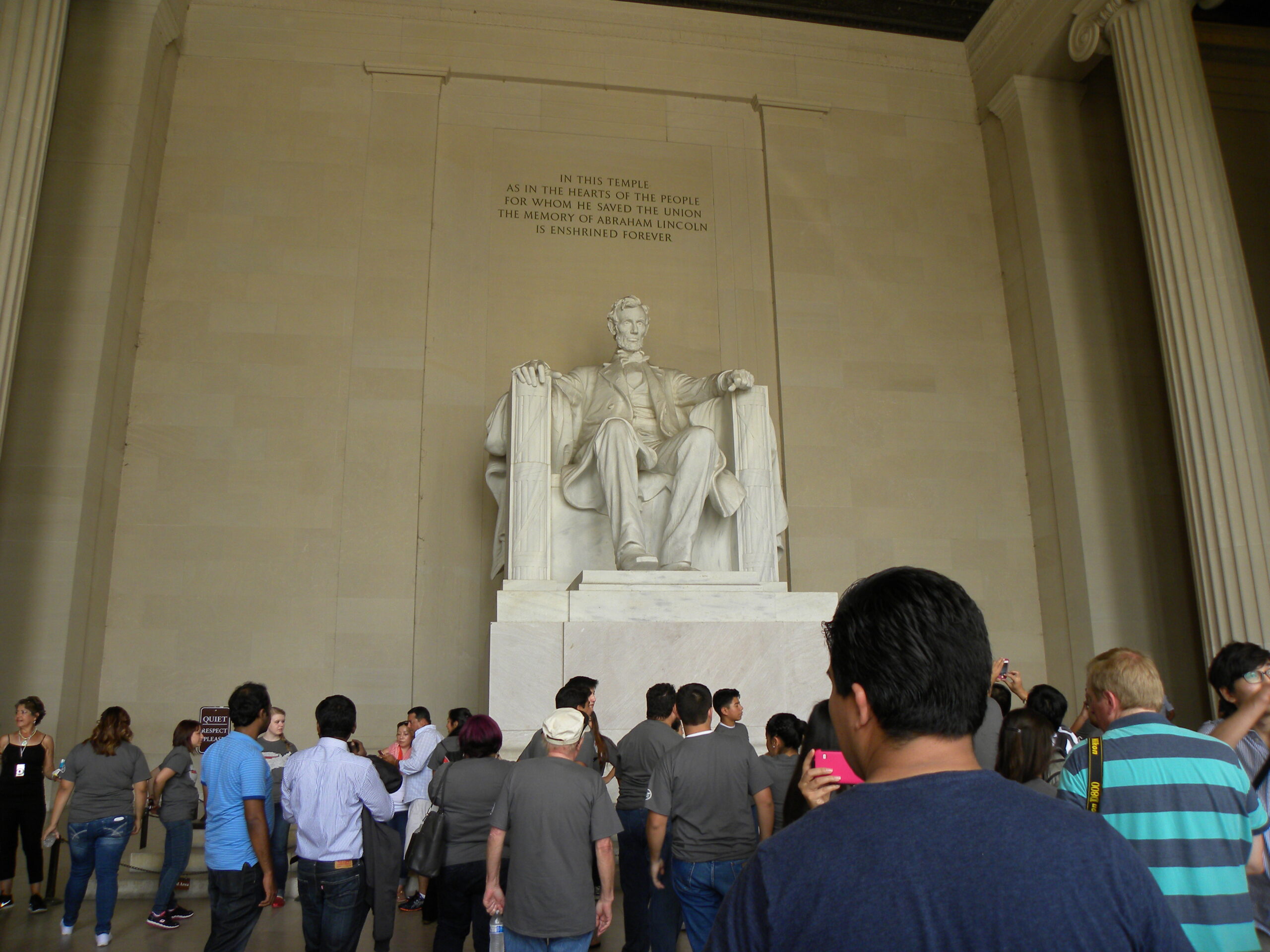
This photograph, taken in Washington, D.C., in 2014, captures the interior of the Lincoln Memorial, one of the most significant sites of national memory in the United States. The image offers a visual analysis of how historical figures are monumentalized and how collective identity is constructed through architectural space.
At the center of the composition sits the large marble statue of Abraham Lincoln, framed by a symmetrical architectural structure that emphasizes stability, order, and permanence. The seated figure, elevated above the viewer, conveys authority while maintaining a sense of reflection and restraint. This balance between power and contemplation is central to the monument’s symbolic meaning.
Above the statue, the engraved inscription reinforces Lincoln’s role in preserving the Union, transforming historical narrative into permanent textual form. The integration of text and sculpture creates a layered experience, where visitors are invited not only to observe but also to read and interpret.
The presence of visitors in the foreground is a crucial element. Unlike isolated monuments, the Lincoln Memorial is actively inhabited. The crowd introduces movement and diversity, contrasting with the stillness and uniformity of the statue. This interaction highlights how national memory is continuously reproduced through public engagement.
From a visual perspective, the neutral tones of the marble and the soft interior lighting create a solemn atmosphere. The absence of strong color shifts the focus toward form, scale, and proportion, reinforcing the monument’s timeless quality.
From a visual history perspective, the Lincoln Memorial represents a specific mode of commemoration. Rather than depicting an event, it centers on an individual figure, whose image becomes a symbolic anchor for broader historical processes, including the Civil War and the abolition of slavery.
At the same time, the site has acquired additional layers of meaning through its use in public life, including political speeches and civil rights demonstrations. These accumulated histories transform the memorial into a dynamic space where past and present intersect.
Ultimately, this Washington photograph (2014) can be read as a study of how nations construct and maintain memory through monumental form. It reveals how architecture, text, and public presence combine to produce a shared historical narrative within a physical space.


Commenti recenti