Monumentality, Ideology, and Collective Memory: The Tomb of Karl Marx, Highgate (2024)
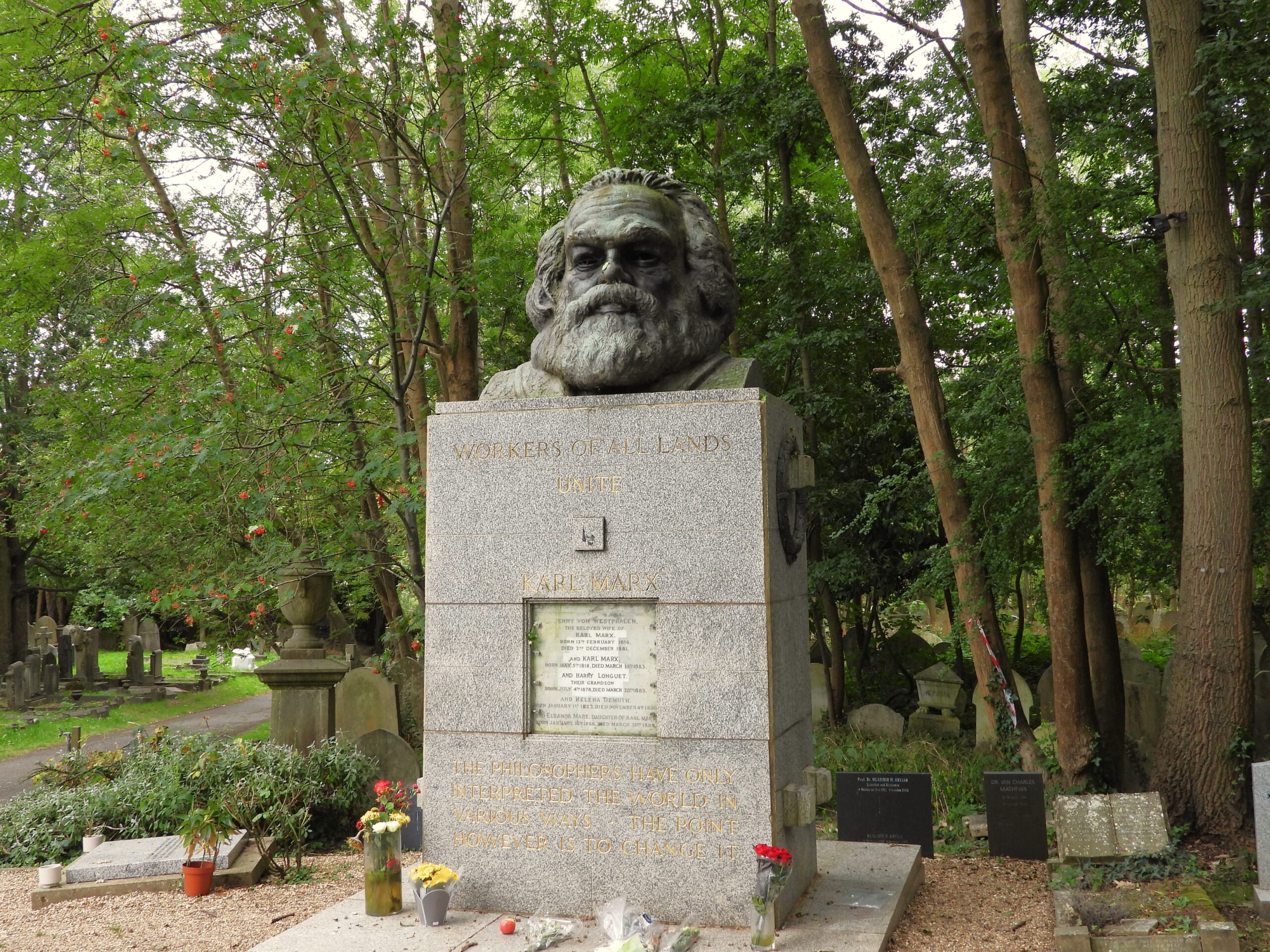
This photograph, taken in 2024 at Highgate Cemetery in London, captures the monumental tomb of Karl Marx (1818–1883), one of the most influential thinkers in modern political and social theory. The image offers a reflection on how ideology, memory, and monumentality intersect within a commemorative landscape.
Unlike more modest graves, this monument asserts a strong visual and symbolic presence. The large sculpted bust of Marx dominates the composition, elevated above a solid stone base that bears inscriptions central to his intellectual legacy. The phrase “Workers of all lands unite” and the engraved quotation from his writings transform the tomb into a site not only of remembrance, but of ongoing ideological transmission. Memory here is explicitly didactic, structured around language as much as form.
The scale and materiality of the monument distinguish it from its surroundings. Set within the more organic and irregular environment of the cemetery, the geometric solidity of the structure creates a clear focal point. This contrast reinforces the perception of Marx as a figure whose ideas extend beyond individual biography, positioning him within a broader historical and political narrative.
At the base of the monument, flowers and small offerings introduce a more intimate dimension. These elements echo the gestures seen in other graves within the cemetery, suggesting that even a highly monumentalized figure remains embedded within everyday practices of remembrance. The coexistence of grand form and personal tribute produces a layered reading of memory, where collective ideology and individual engagement intersect.
From a broader perspective, the photograph highlights the transformation of intellectual figures into sites of pilgrimage. Visitors approach the tomb not only to acknowledge a historical individual, but to engage with a set of ideas that continue to resonate globally. The monument thus operates as both a physical marker and a symbolic node within ongoing political and cultural discourse.
In contrast with more understated memorials, this tomb foregrounds the relationship between power and representation. Its scale, inscriptions, and visual authority construct a narrative that seeks permanence and influence, extending the presence of Marx beyond his lifetime. The cemetery, typically associated with silence and withdrawal, becomes here a space of articulation and ideological continuity.
Ultimately, this image can be read as an exploration of how monuments function as active agents in the construction of memory. The tomb of Karl Marx does not merely commemorate the past; it frames it, interprets it, and projects it into the present, shaping how history is understood and remembered within the public sphere.




Commenti recenti