Consumption, Pop Iconography, and Museum Space in Kyoto (2025)
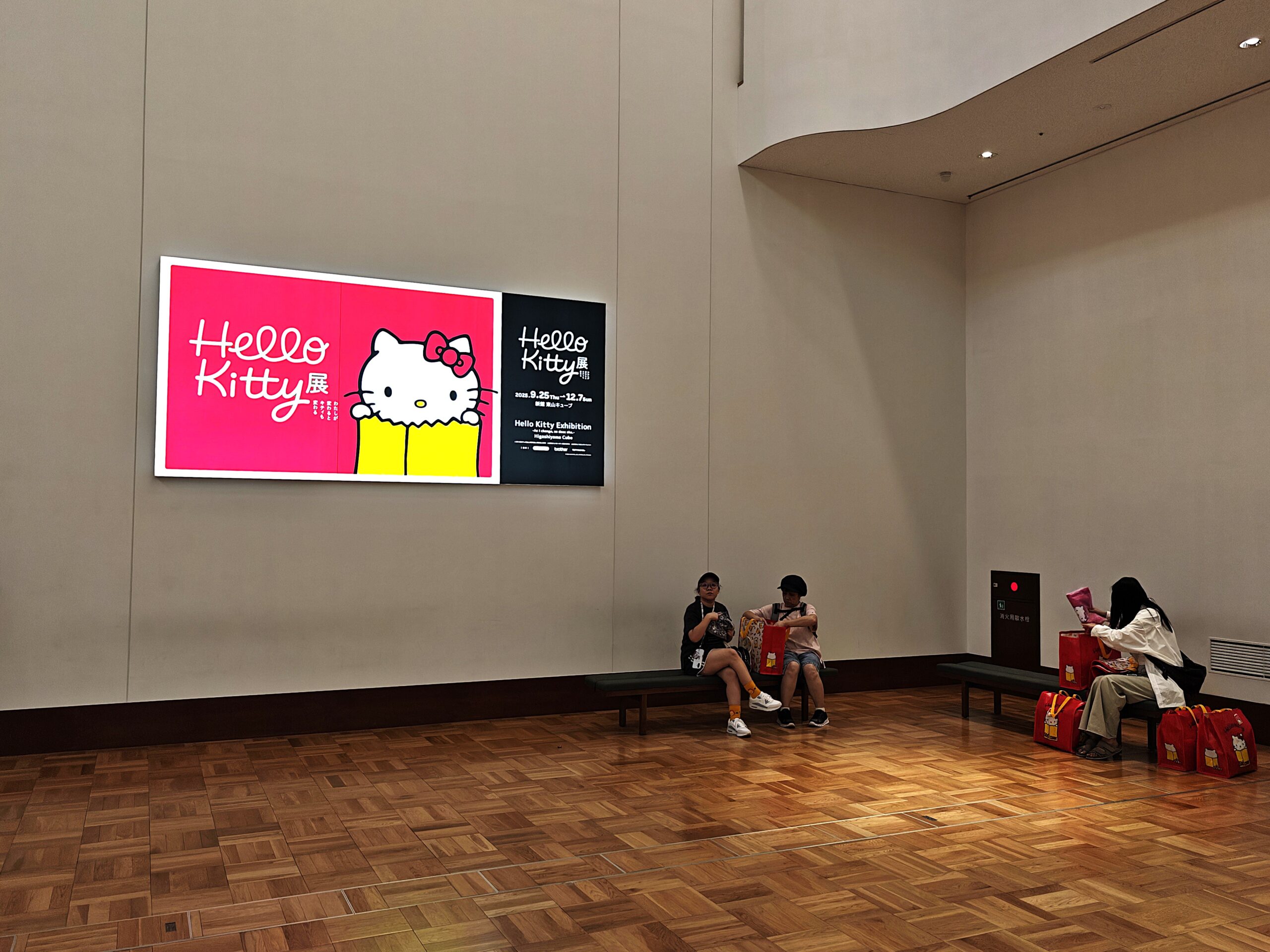
This photograph, taken in 2025 inside the Kyocera Museum of Art in Kyoto, captures a quiet moment within a contemporary exhibition space dedicated to the globally recognized character Hello Kitty. The image offers a subtle yet incisive reflection on the intersection between museum culture, consumption, and pop iconography.
At first glance, the scene appears minimal and contemplative: a large, nearly empty room defined by clean architectural lines, soft lighting, and expansive surfaces. A brightly lit panel displaying Hello Kitty stands out against the neutral background, acting as a focal point that introduces a strong visual contrast. This juxtaposition between minimalist museum aesthetics and the vivid, immediately recognizable imagery of a pop icon creates a tension between institutional space and mass culture.
Seated along the wall, visitors occupy the space in a dispersed and informal manner. Their posture suggests a pause—a moment of rest within the museum experience. However, the presence of multiple branded shopping bags placed beside them introduces a crucial element into the scene. These objects shift the reading of the image from passive observation to active consumption, revealing how the exhibition extends beyond viewing into acquisition.
The shopping bags, visually consistent and prominently displayed, function as markers of participation in a broader cultural economy. They indicate that the encounter with the exhibition is not limited to the contemplation of images but includes the purchase of objects that materialize the experience. In this sense, the museum space becomes intertwined with retail practices, blurring the boundary between cultural institution and commercial environment.
The composition reinforces this interpretation. The visitors are positioned beneath the illuminated display, creating a visual alignment between the icon above and the commodities below. The empty floor space in the foreground further emphasizes the distance between viewer and object, while also drawing attention to the stillness of the scene. This spatial arrangement highlights the transformation of cultural engagement into a structured, almost ritualized process.
From a broader perspective, the photograph reflects the integration of global pop culture into institutional contexts. Hello Kitty, originally conceived as a commercial character, is here presented within a museum framework, gaining a form of cultural legitimacy while retaining its commercial function. This dual status exemplifies how contemporary culture dissolves distinctions between high and low, art and commodity.
At the same time, the image points to the role of consumption in shaping contemporary cultural experiences. The act of purchasing becomes an extension of viewing, allowing visitors to carry fragments of the exhibition beyond its physical space. The museum thus operates not only as a site of display but also as a node within a network of production, distribution, and personal identity construction.
Ultimately, this photograph can be read as an exploration of how visual culture, consumption, and institutional space converge in the contemporary city. It reveals a moment in which cultural experience is mediated through objects, images, and practices that extend far beyond the act of looking, transforming the museum into a space of both reflection and acquisition.


Commenti recenti