Repetition, Commodity, and Pop Icon Circulation in Tokyo (2025)
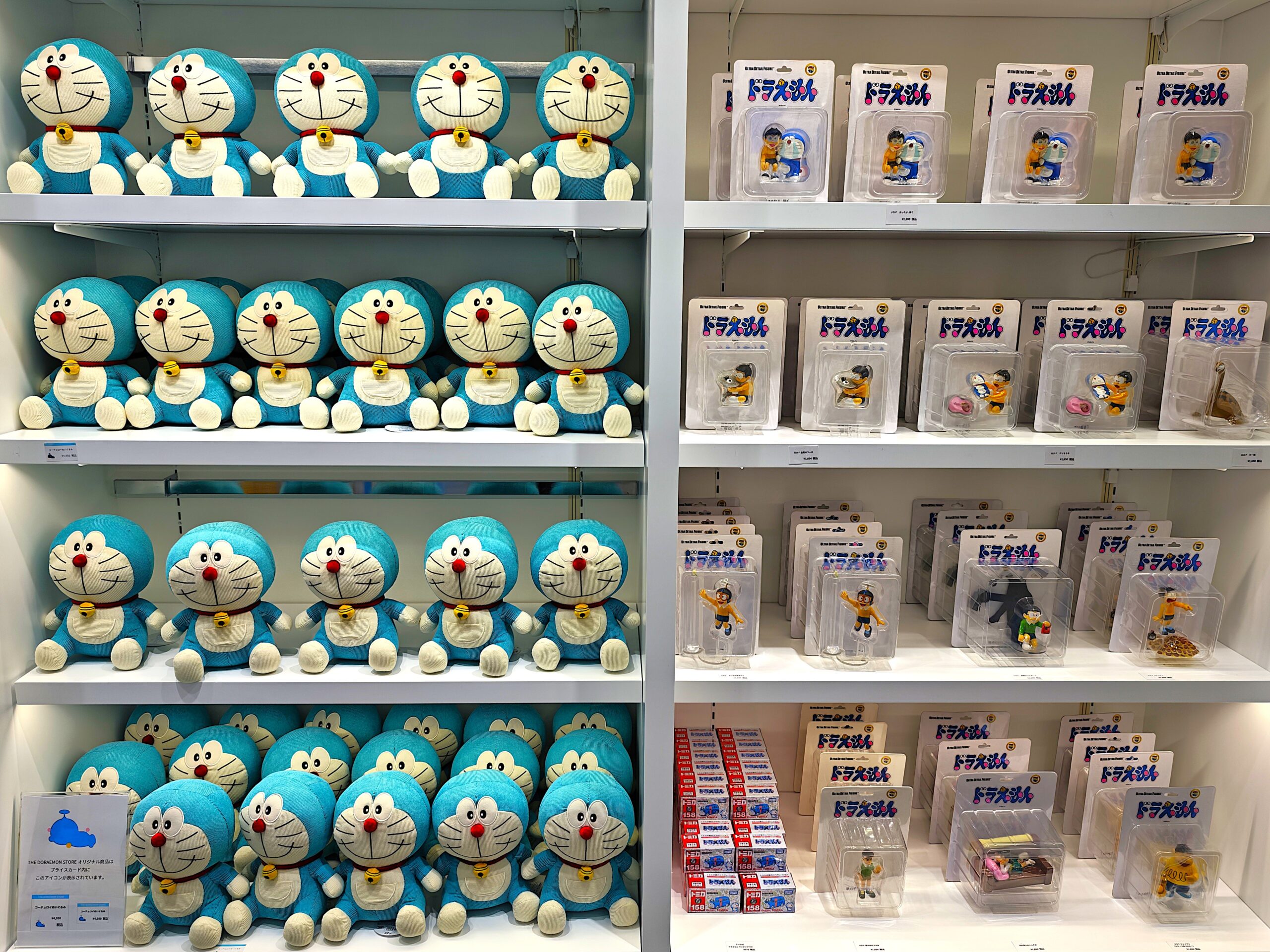
This photograph, taken in Tokyo in 2025 in the Shibuya district, captures a retail display entirely structured around the repetition of a single pop culture figure: Doraemon. The image offers a precise visual reflection on seriality, consumption, and the circulation of cultural icons within contemporary urban economies.
The composition is dominated by shelves filled with nearly identical objects. Rows of plush toys and packaged figurines are arranged with careful regularity, producing a rhythm based on repetition and slight variation. This visual uniformity transforms the character into a modular unit, endlessly reproducible and immediately recognizable. Identity, in this context, is not singular but multiplied, existing through accumulation rather than uniqueness.
The distinction between the soft, tactile plush figures on the left and the standardized, transparent packaging on the right introduces a subtle contrast between intimacy and display. While the plush toys suggest a more personal, affective relationship, the packaged figurines emphasize collectibility, preservation, and exchange value. Together, they reveal the dual nature of contemporary commodities: objects of attachment and elements within a broader system of circulation.
The retail environment plays a crucial role in structuring this experience. The clean, brightly lit shelves and the precise organization of the products reflect a controlled aesthetic that aligns with the logic of contemporary consumer spaces. Here, visual order enhances desirability, guiding the viewer’s gaze and reinforcing the perception of abundance. The act of choosing becomes embedded within a pre-designed visual system.
From a broader perspective, the photograph highlights how global pop culture icons operate within systems of mass production and distribution. Doraemon, originally emerging from manga and animation, is here translated into a series of objects that circulate across markets and contexts. The character’s identity is maintained through visual consistency, even as it is reproduced in different formats and scales.
At the same time, the image points to the relationship between repetition and desire. The abundance of identical figures does not diminish their appeal; instead, it reinforces their status as collectible items. The logic of accumulation becomes central, encouraging the acquisition of multiple variations and sustaining engagement with the brand.
Ultimately, this photograph can be read as an exploration of how contemporary urban life is structured through systems of visual repetition and consumption. It reveals a space in which cultural meaning is produced not only through images but through their material replication, transforming a fictional character into a pervasive and enduring presence within everyday experience.


Commenti recenti