Memory, Material Traces, and Intellectual Legacy: The Grave of Eric Hobsbawm, Highgate (2024)
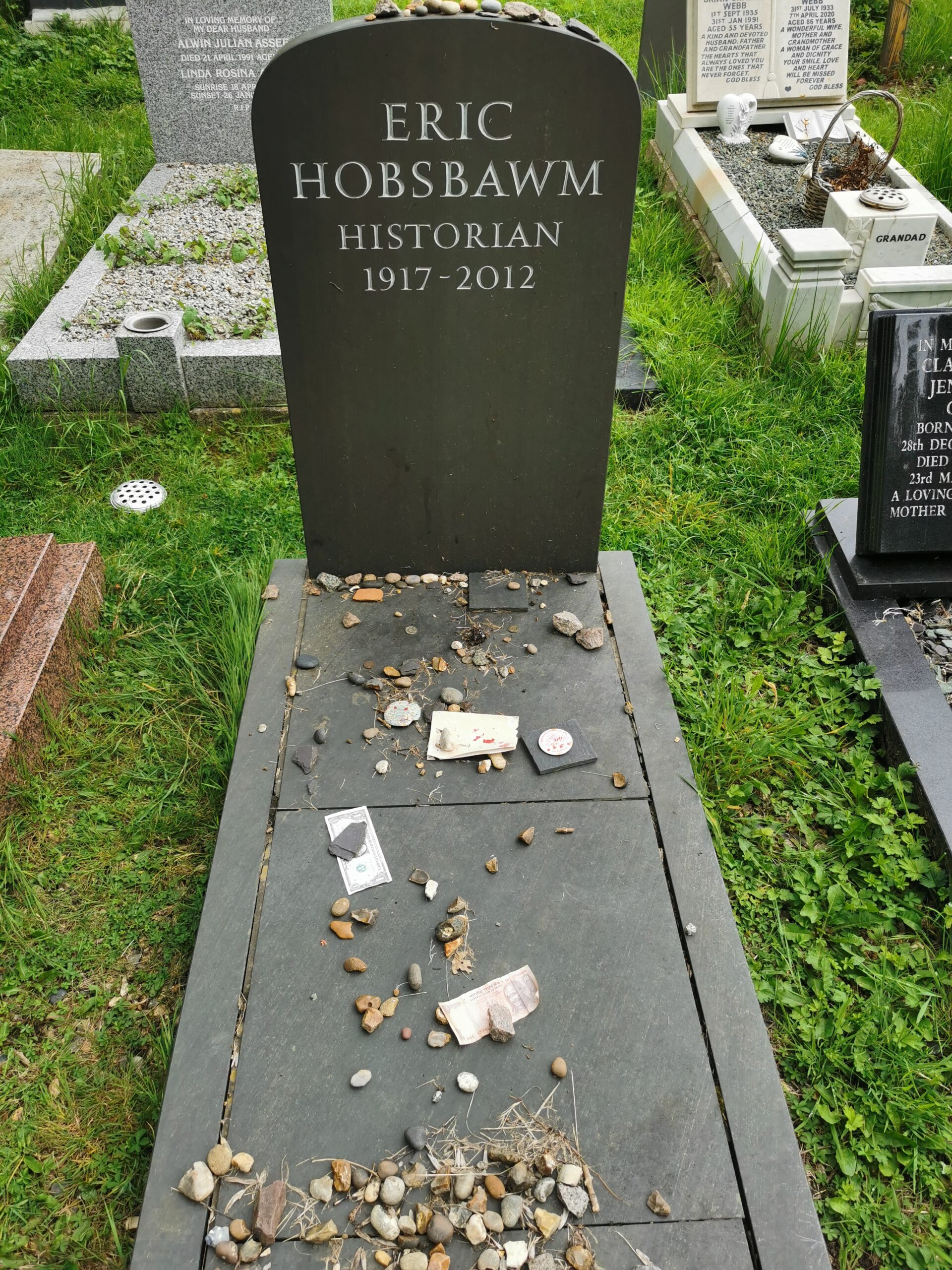
This photograph, taken in 2024 at Highgate Cemetery in London, captures the grave of Eric Hobsbawm (1917–2012), one of the most influential historians of the twentieth century. The image offers a reflection on memory not as an abstract concept, but as a set of material practices through which individuals engage with the past and give form to remembrance.
The gravestone itself is striking in its simplicity. The inscription identifies Hobsbawm primarily through his intellectual role—“historian”—foregrounding a life defined by thought, writing, and interpretation. Unlike monumental memorials that assert authority through scale or ornamentation, this marker remains restrained, inviting a more intimate and personal mode of engagement.
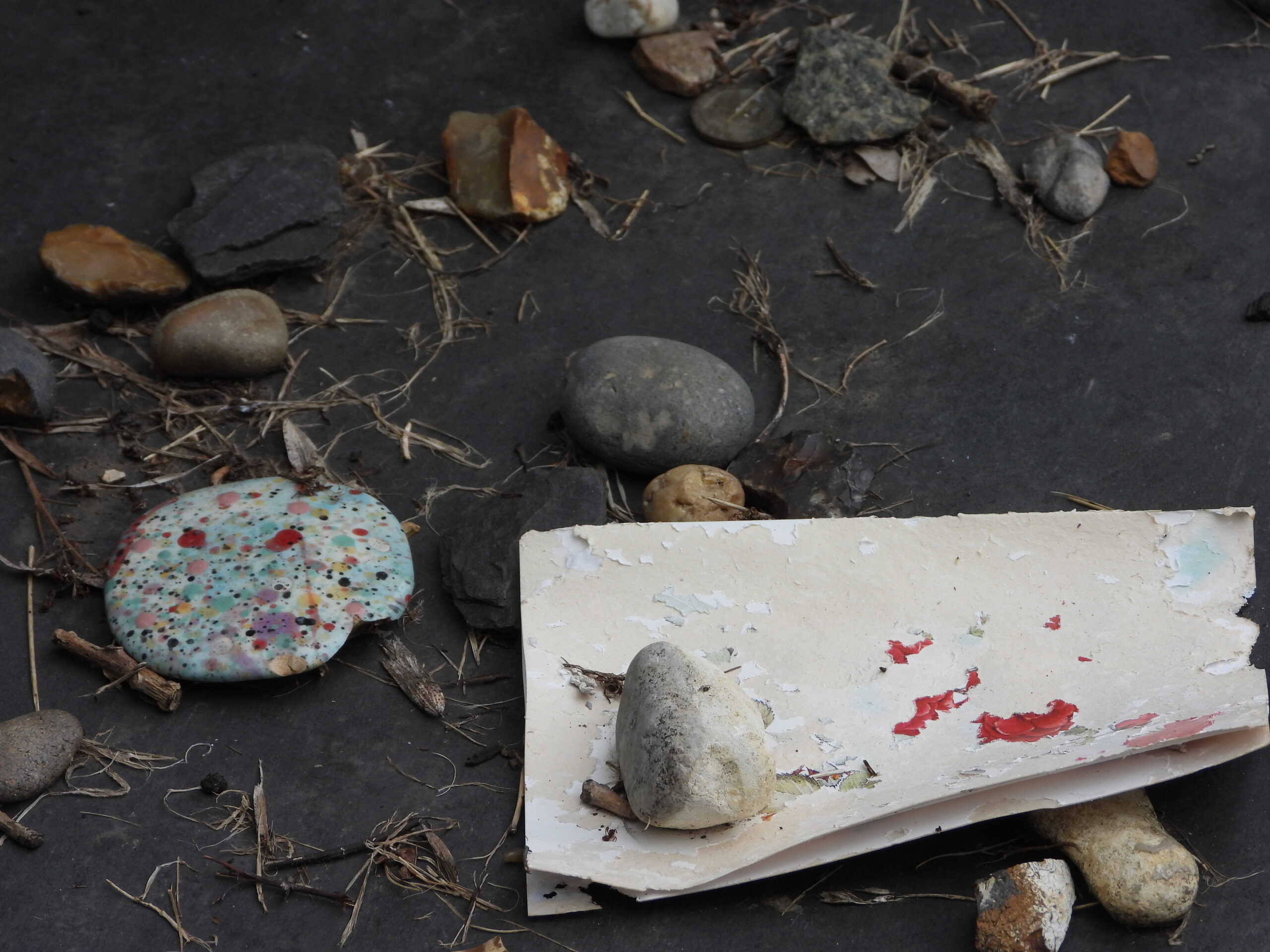
What transforms the site into a dynamic space of memory, however, are the objects placed upon the grave. Small stones, coins, and fragments of paper are scattered across the surface, left by visitors as gestures of acknowledgment and continuity. These elements, modest in appearance, carry significant symbolic weight. The stones suggest permanence and presence, while the coins introduce an economy of offering that bridges personal memory and cultural ritual.
The accumulation of these traces produces a layered temporality. Each object marks a moment of visitation, turning the grave into an evolving surface where memory is continuously rewritten. The site is not static but processual, shaped by repeated acts of return and recognition. In this sense, remembrance becomes an active practice rather than a fixed state.
From a broader perspective, the image highlights how intellectual figures are commemorated within everyday spaces. Unlike statues or institutional monuments, the grave situates Hobsbawm within a shared landscape of mortality, where distinctions between public and private memory become blurred. His legacy persists not only through his writings but also through these small, anonymous gestures performed by visitors.
The photograph also points to the relationship between materiality and memory in contemporary culture. In an age increasingly defined by digital archives and immaterial forms of remembrance, the physicality of these objects acquires particular significance. Touch, placement, and presence become central to the act of remembering, anchoring abstract historical narratives in tangible experience.
Ultimately, this image can be read as an exploration of how memory is constructed through accumulation, interaction, and material traces. The grave of Eric Hobsbawm becomes not only a site of commemoration, but a space where history, personal reflection, and ritual converge in quiet but meaningful ways.




Commenti recenti